

Most people assume mindfulness requires a quiet room, a meditation cushion, and at least 30 uninterrupted minutes. That assumption stops a lot of people before they even start. The truth is that quick mindfulness routines can effectively reduce stress, even when they last just a minute or two. Mindfulness habits are not about perfection or lengthy sessions. They are about showing up consistently, with intention, in small and manageable ways. This guide breaks down exactly what a mindfulness habit is, why it works, what risks to watch for, and how you can build one starting today.
Table of Contents
- Defining mindfulness habits: More than meditation
- Why mindfulness habits work: Evidence and mechanisms
- Risks, limitations, and edge cases
- How to build a mindfulness habit: Practical steps for beginners
- Experience sustainable mindfulness: Easy daily rituals with The Positivity Anchor
- Frequently asked questions
Key Takeaways
| Point | Details |
|---|---|
| Mindfulness is more than meditation | Regular acts of awareness as daily habits help build calm and resilience beyond formal meditation. |
| Short routines are effective | Simple, brief practices can reliably reduce stress and support mental well-being. |
| Personalize your approach | Adjust mindfulness habits to your needs, and be mindful of potential risks and skill gaps. |
| Consistency matters most | Habitual, daily mindfulness—even in small doses—yields moderate, sustainable benefits. |
| Accessible tools support habit formation | Guided resources like The Positivity Anchor make building a mindfulness habit easy for beginners. |
Defining mindfulness habits: More than meditation
A mindfulness habit is not the same as a meditation practice, though the two overlap. Meditation is one tool. A mindfulness habit is broader. It is any regular, intentional act of present-moment awareness woven into your daily life. That could mean taking three slow breaths before you check your phone, noticing the warmth of your coffee cup in the morning, or pausing to observe your thoughts without reacting to them.
Researchers note that definitions of mindfulness vary across attention, acceptance, and compassion, which means there is no single right way to practice it. What matters is the intention behind the act and the consistency with which you return to it. The nuances of mindfulness go well beyond sitting still and breathing deeply.
Here is a quick comparison to clear up the confusion:
| Feature | Mindfulness habit | Meditation-only approach |
|---|---|---|
| Duration | 1 to 10 minutes | Often 20 to 45 minutes |
| Setting | Anywhere, anytime | Quiet, dedicated space |
| Flexibility | High | Low to moderate |
| Entry barrier | Very low | Moderate to high |
| Core attitude | Awareness plus acceptance | Focused attention |
Key attitudes that define a genuine mindfulness habit include:
- Acceptance: Letting experiences be what they are without forcing change
- Non-judgment: Observing thoughts and feelings without labeling them as good or bad
- Compassion: Treating yourself with the same kindness you would offer a friend
- Curiosity: Approaching each moment with openness rather than assumption
One of the most accessible entry points is building a gratitude habit alongside your mindfulness practice. Gratitude and present-moment awareness reinforce each other naturally, making both habits easier to sustain.
Why mindfulness habits work: Evidence and mechanisms
Now that we know what mindfulness habits are, let us explore why they actually work and how they hold up against other stress-management techniques.

Meta-analyses show that mindfulness-based interventions reduce perceived stress, anxiety, and depression across a wide range of populations. These are not small or fleeting effects. They are moderate and sustained, meaning the benefits tend to stick when the habit is maintained over time.
What makes brief practices so effective? The answer lies in neuroplasticity, which is your brain's ability to rewire itself based on repeated experience. Every time you pause and observe your thoughts without reacting, you are strengthening neural pathways associated with emotional regulation and resilience. Over weeks and months, this adds up.
Research also suggests that mindfulness habits may be non-inferior to structured programs for distress reduction. In other words, a consistent daily habit can deliver results comparable to formal eight-week programs, without the time commitment.
Here is how mindfulness habits compare to other common interventions:
| Intervention | Time required | Accessibility | Evidence strength |
|---|---|---|---|
| Mindfulness habits | 1 to 10 min/day | Very high | Strong |
| Cognitive behavioral therapy | Weekly sessions | Moderate | Very strong |
| Exercise | 30 min, 3x/week | Moderate | Strong |
| Breathing exercises | 5 to 10 min/day | High | Moderate to strong |
Short mindfulness practices have shown measurable benefits even in single-session studies, which is encouraging for anyone who feels they do not have enough time. Pairing mindfulness with a daily mindset routine amplifies these effects by creating a structured anchor for your day.
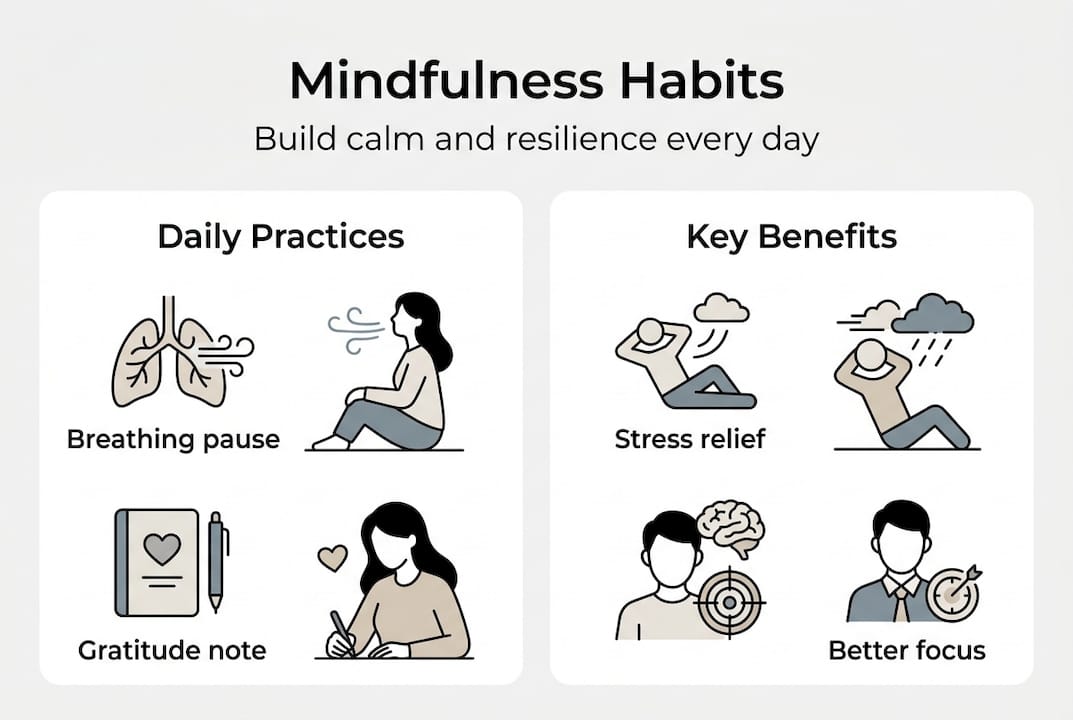
If you are looking for somewhere to start, beginner mindfulness exercises can help you find the right fit for your lifestyle and schedule.
Risks, limitations, and edge cases
While the benefits are real, it is critical to understand the limitations and potential risks that mindfulness habits may bring.
Mindfulness is not universally helpful for everyone. Risks include anxiety and dissociation, with roughly an 8% risk in some groups, particularly those with trauma histories. For these individuals, turning inward without proper support can sometimes intensify distress rather than ease it.
Here are the most common pitfalls to watch for:
- Passivity: Using mindfulness as a reason to avoid taking action on real problems in your life
- Neglecting emotion regulation: Observing emotions without ever learning to process or respond to them constructively
- Over-reliance: Treating mindfulness as the only tool you need, while ignoring therapy, social support, or medical care
- Skipping trauma-informed adaptations: Practicing without guidance when you have a history of trauma or dissociation
"Mindfulness is a powerful starting point, but it works best when it is part of a broader toolkit for mental well-being, not a replacement for other forms of support."
Exploring personalized mindfulness approaches is especially important if you have found that standard practices leave you feeling worse rather than better. Not all mindfulness is the same, and finding the right fit matters.
Pro Tip: If you notice that mindfulness practice consistently increases your anxiety or makes you feel disconnected, pause and speak with a mental health professional before continuing. Adapting the practice is always better than pushing through discomfort.
For most people, the solution is balance. Acceptance and action are not opposites. A good mindfulness habit helps you see clearly so you can act wisely. Pairing it with gratitude practice tips can help you stay grounded while also building a more positive emotional baseline.
How to build a mindfulness habit: Practical steps for beginners
With risks in mind, let us move to practical ways you can start building a mindfulness habit, no matter your schedule.
The best starter practices are simple, short, and easy to remember. Recommended quick routines for beginners include a 1-minute breath focus, a mindful wake-up, and sensory check-ins throughout the day. These require no equipment, no special setting, and no prior experience.
Here is a step-by-step approach to get started:
- Choose one anchor moment: Pick a single daily activity, like brushing your teeth or making coffee, and commit to being fully present during it
- Start with one minute: Set a timer and focus only on your breath or your senses for 60 seconds. That is it.
- Add a sensory check-in: Once per day, pause and name five things you can see, four you can hear, and three you can feel
- Track your mood: After each practice, note how you feel. Even a one-word entry builds self-awareness over time
- Expand gradually: After two weeks, add a second anchor moment or extend your breath focus to three minutes
Consistency matters far more than duration. A 2-minute practice done every day beats a 30-minute session done once a week. Short mindfulness benefits accumulate through repetition, not intensity.
Common challenges and how to handle them:
- Missed a day? Simply restart the next morning without guilt. One missed day does not break a habit.
- Feeling distracted? That is normal. Noticing distraction is itself a mindfulness moment. Gently return your focus.
- Not sure if it is working? Give it at least three weeks before evaluating. Early practice often feels awkward.
Pro Tip: Pair your mindfulness moment with something you already do automatically, like pouring your morning glass of water. This technique, called habit stacking, dramatically increases follow-through.
A 5-minute reset routine is a great next step once you have your anchor moment locked in. For more structured ideas, beginner routine ideas can help you build a full morning practice around your new habit.
Experience sustainable mindfulness: Easy daily rituals with The Positivity Anchor
Putting all of this into practice is easier when you have a structured, guided tool to support you. The Positivity Anchor is a free digital platform built around a simple 5-minute mindfulness ritual that combines gratitude prompts, affirmations, and mindful reflection into one daily practice. It is designed specifically for people who are new to mindfulness or who want a quick, manageable routine they can actually stick with.
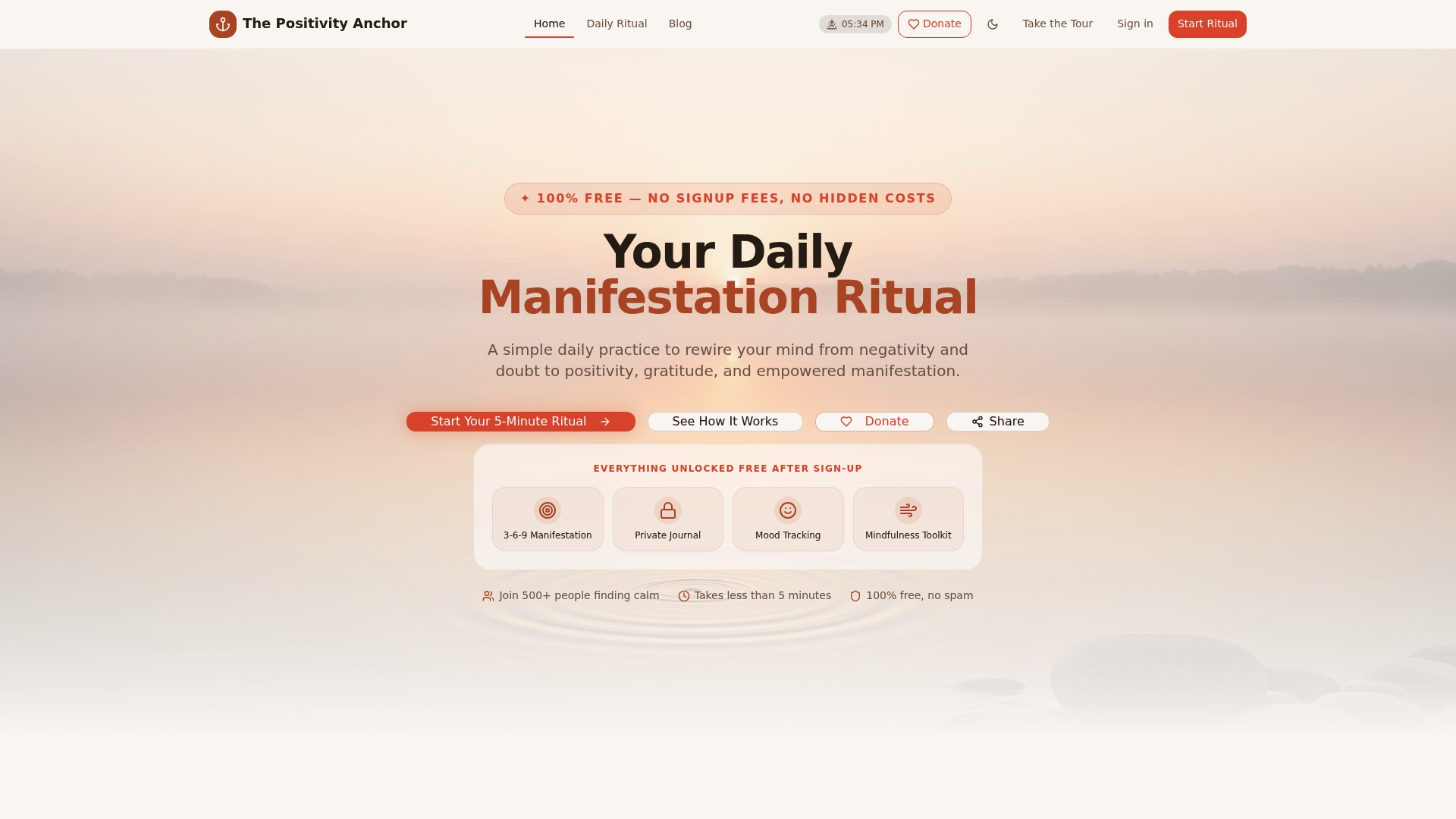
The platform includes mood tracking, personal journaling, guided meditations, and visualization tools, all free and accessible from any device. Whether you are just starting out or looking to deepen a habit you already have, The Positivity Anchor gives you a consistent anchor point each morning. Explore more daily habit tips on the blog to keep building momentum and find routines that fit your life.
Frequently asked questions
What is considered a mindfulness habit?
A mindfulness habit is any regular, intentional act of present-moment awareness done as part of your daily routine, not just formal meditation sessions. It can be as simple as one mindful breath before you start your workday.
Can short mindfulness exercises really help with stress?
Yes. Brief mindful routines such as 1-minute breathing or sensory check-ins can reduce stress and improve resilience, according to evidence-based studies. Consistency is what makes them effective over time.
Are there risks to practicing mindfulness habits?
Some people may experience anxiety or dissociation, especially those with trauma histories. Risks include dissociation in roughly 8% of certain groups, so mindfulness habits are not universally safe and may need adaptation.
How do I start a mindfulness habit if I am a beginner?
Start with simple routines like a mindful breath or sensory check-in and pair them with daily activities you already do. Building on existing habits makes it far easier to stay consistent from day one.
Recommended
- The Positivity Anchor — 5-Minute Daily Gratitude & Mindfulness Ritual
- The Positivity Anchor — 5-Minute Daily Gratitude & Mindfulness Ritual
- How to Build a Gratitude Habit That Sticks | The Positivity Anchor — Issue #7
- Your Daily Mindset Routine — How to Reset in 5 Minutes | The Positivity Anchor — Issue #8