

Starting a mindfulness practice can feel intimidating, especially when every article you find talks about hour-long meditation sessions or expensive retreats. The truth is, you don't need any of that. Research consistently shows that even a few focused minutes each day can shift your mental state, lower stress, and sharpen your thinking. This guide is built specifically for beginners who want real, usable rituals that fit into a packed schedule. No prior experience required, no special equipment, and no pressure to be perfect. Just small, intentional moments that add up to something meaningful.
Table of Contents
- How to choose the right mindfulness ritual
- Five simple mindfulness rituals to try today
- Comparison table: Which ritual fits your lifestyle?
- Matching rituals to your routine: Situational recommendations
- Boost your mindful living with Positivity Anchor
- Frequently asked questions
Key Takeaways
| Point | Details |
|---|---|
| Small rituals, big impact | Even a few mindful minutes each day can dramatically reduce stress. |
| Choose what fits you | Personalize your routine based on your lifestyle and preferences for better results. |
| Easy to start and stick | Link new rituals to existing habits and keep them short for ongoing success. |
| No meditation required | Mindfulness can be practiced through simple daily actions, not just meditation. |
How to choose the right mindfulness ritual
Not every mindfulness ritual works for every person, and that's completely fine. The goal isn't to find the "correct" practice. It's to find one that you'll actually do. Here's a simple framework to help you narrow it down.
- Keep it short. Aim for rituals that take five minutes or less. When something feels manageable, you're far more likely to repeat it. A two-minute breathing exercise done daily beats a 30-minute session done once a month.
- Identify your peak stress times. Think about when you feel most overwhelmed during the day. Is it first thing in the morning before the day kicks in? During a chaotic workday? Or in the evening when you're trying to wind down? Matching your ritual to your stress window makes it more effective.
- Choose something that feels good. If a ritual feels like a chore, you'll drop it within a week. Pick something that brings even a small sense of relief or pleasure. Enjoyment is the secret ingredient in consistency.
- Be willing to experiment. There is no perfect ritual. Try something for three days. If it doesn't click, swap it out. Mindfulness is a practice, not a performance.
You can find a wide range of quick mindfulness tips to help you explore what resonates with your lifestyle and personality.
Pro Tip: Start with just one ritual. Picking three at once is a fast track to overwhelm. Master one small habit first, then layer in more when it feels natural.
Five simple mindfulness rituals to try today
With a framework in mind, let's look at easy rituals you can start today. No special equipment or experience needed.
Deep breathing exercises can lower stress in just minutes, making them one of the most accessible tools in your mental wellness kit. Here are five rituals worth trying:
- One-minute deep breathing reset. Sit or stand comfortably, close your eyes, and take five slow, deep breaths. Inhale for four counts, hold for two, exhale for six. That's it. This single minute can interrupt a stress spiral and bring you back to the present.
- Gratitude journaling. Each morning, write down three things you're grateful for before you check your phone. They don't have to be profound. "Good coffee" counts. This 5-minute gratitude ritual rewires your brain to scan for the positive rather than the negative.
- Intentional senses check-in. Pause wherever you are and notice three things you can see, two you can hear, and one you can smell. This grounds you in the present moment almost instantly and works anywhere.
- Mindful walking. Step outside for just two minutes. Focus on each footfall, the texture of the ground, the temperature of the air. Walking mindfully turns a mundane activity into a genuine reset.
- Silent sipping. Drink your morning coffee or tea in complete silence. No phone, no news, no background noise. Notice the warmth of the cup, the smell, the taste. This tiny ritual can set a calm tone for the entire day.
"The present moment is the only moment available to us, and it is the door to all moments." This idea sits at the heart of every ritual listed here. You're not trying to empty your mind. You're just learning to notice what's already there.
Pro Tip: Pair your gratitude journaling with a habit you already have, like making your morning coffee. The existing habit acts as a trigger, making the new ritual easier to remember. Check out these gratitude habit tips for more ways to make it stick.

Comparison table: Which ritual fits your lifestyle?
Still unsure which ritual to adopt? The following table breaks down what fits best based on your needs.
Short daily mindfulness exercises can improve focus and wellbeing, and the table below helps you match the right practice to your real-life situation.
| Ritual | Time needed | Best time of day | Works anywhere? | Key benefit |
|---|---|---|---|---|
| Deep breathing reset | 1 minute | Anytime | Yes | Instant stress relief |
| Gratitude journaling | 3 to 5 minutes | Morning | Needs pen or app | Positive mindset shift |
| Senses check-in | 1 to 2 minutes | Midday or evening | Yes | Grounding and presence |
| Mindful walking | 2 minutes | Morning or lunch | Needs outdoor space | Clears mental fog |
| Silent sipping | 3 to 5 minutes | Morning | Needs a quiet spot | Calm, focused start |
A few things to note when reading this table. The "works anywhere" column matters most if you're trying to fit rituals into a busy workday. Deep breathing and the senses check-in win here because they require zero props and zero privacy. Gratitude journaling and silent sipping are better suited for home, where you have a bit more control over your environment. You can explore more ideas on the mindfulness exercises blog to expand your toolkit over time.
Matching rituals to your routine: Situational recommendations
Having seen how the rituals compare, let's explore practical ways to make them part of your day. The biggest barrier for most beginners isn't motivation. It's forgetting. Life moves fast, and new habits get swallowed up by old ones.
Integrating simple routines into daily life can foster lasting mindfulness habits, and the key is to attach your new ritual to something you already do automatically.
Here are some real-life scenarios and the rituals that fit them best:
- Morning rush: Before you reach for your phone, spend three minutes writing your three gratitude items. Keep a small notebook on your nightstand or use a notes app. This takes less time than scrolling social media and delivers far more mental benefit.
- Work break: After a draining meeting, step away from your screen and do a one-minute breathing reset. It clears the mental residue of the meeting and helps you approach the next task with a fresh perspective.
- Evening transition: When you get home from work, do a quick senses check-in before you sit down. Notice what you see, hear, and smell in your home environment. This signals to your brain that the workday is over and helps you shift into rest mode.
- Weekend mornings: Try mindful walking or silent sipping when you have a little more time. These rituals are slower and more sensory, making them perfect for days when you're not rushing.
| Scenario | Recommended ritual | Time required | Trigger habit |
|---|---|---|---|
| Morning rush | Gratitude journaling | 3 to 5 minutes | Before checking phone |
| Post-meeting slump | Deep breathing reset | 1 minute | After closing laptop |
| Evening wind-down | Senses check-in | 1 to 2 minutes | Arriving home |
| Weekend morning | Silent sipping or mindful walk | 2 to 5 minutes | Making coffee or tea |
Pro Tip: Write your chosen ritual on a sticky note and place it somewhere you'll see it during your trigger moment. A note on the coffee maker that says "breathe first" is surprisingly effective. For more strategies on building habits that last, visit creating habits that last.
Consistency matters far more than intensity. A one-minute ritual done every single day will change your mental landscape more than a 30-minute session done twice a month. Start small, stay consistent, and trust the process.
Boost your mindful living with Positivity Anchor
If you're ready to take these rituals beyond a casual experiment and build a real daily practice, Positivity Anchor is designed exactly for that. It's a free platform that guides you through a structured five-minute daily ritual combining gratitude prompts, affirmations, and mindful reflection, all in one place.
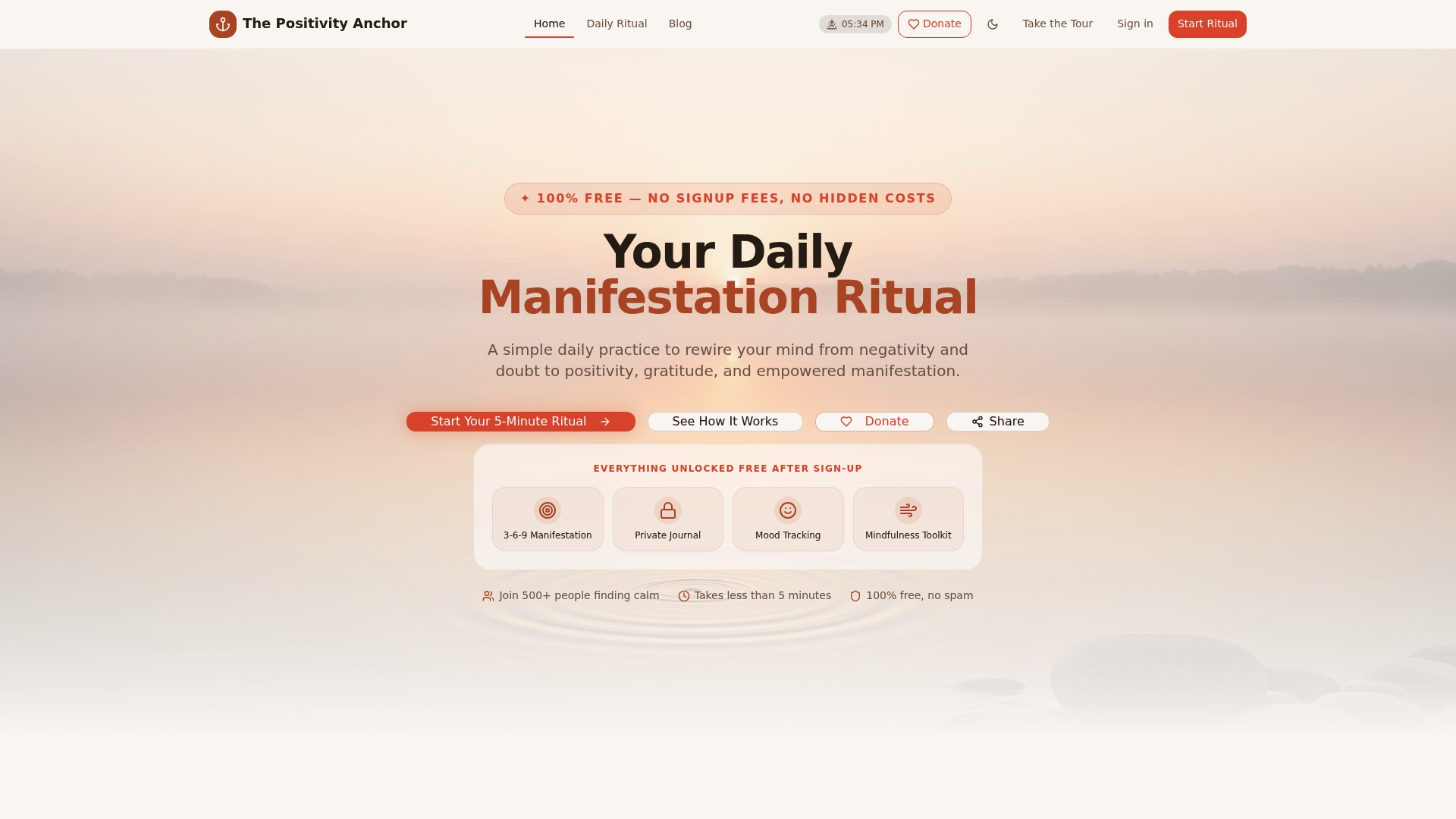
You don't need to figure out the structure on your own. Positivity Anchor mindfulness rituals give you a ready-made framework that takes the guesswork out of where to start. Features like mood tracking, personal journaling, and guided meditations help you stay consistent and notice your progress over time. Explore more mindfulness routines to keep your practice fresh and growing. It's free, it's beginner-friendly, and it's built to fit into even the busiest mornings.
Frequently asked questions
Can I really benefit from mindfulness rituals if I only have a few minutes a day?
Yes. Short rituals reduce stress and improve wellbeing, and even one or two focused minutes daily can create a noticeable shift in your mood and mental clarity over time.
What's the easiest ritual for absolute beginners?
A one-minute deep breathing reset is the simplest starting point because it requires no tools, no setup, and no experience. Quick breathing exercises make mindfulness approachable for anyone, regardless of where they're starting from.
How do I stick with my mindfulness ritual long-term?
Pair your ritual with an existing daily habit and keep sessions short. Linking rituals to routines helps make mindfulness a lasting habit by removing the need to remember or motivate yourself from scratch each day.
Do I have to meditate to practice mindfulness?
Not at all. Mindfulness is broader than meditation and includes everyday activities like mindful walking, journaling, or simply drinking your morning coffee with full attention.