

You wake up already dreading the day. Your mind is running through a list of worries before your feet even hit the floor. That tight, heavy feeling in your chest is familiar, and no matter how many times you tell yourself to "think positive," nothing seems to stick. Guided gratitude reflection is a structured, prompt-based practice that gives your brain a specific focus instead of leaving you to figure it out alone. Meta-analyses show that gratitude interventions reliably reduce depression and anxiety after practice. This guide walks you through exactly what it is, what you need, how to do it step by step, what to watch out for, and what kind of results you can realistically expect.
Table of Contents
- What is guided gratitude reflection?
- Gather what you need to get started
- Step-by-step: How to do guided gratitude reflection
- Common pitfalls and how to avoid them
- What changes to expect: Short- and long-term effects
- Accelerate your growth with The Positivity Anchor
- Frequently asked questions
Key Takeaways
| Point | Details |
|---|---|
| Easy for beginners | Guided gratitude reflection uses prompts to make starting simple and effective. |
| Science-backed mood boost | Consistent sessions can reliably increase positivity and reduce stress. |
| Minimal tools needed | Just a quiet spot and a few minutes are all you need to begin. |
| Best results with routine | Daily or regular practice maximizes the well-being benefits over time. |
What is guided gratitude reflection?
Guided gratitude reflection is a short, structured mental practice where you use specific prompts or questions to direct your attention toward things you genuinely appreciate. Unlike open-ended journaling, where you stare at a blank page hoping inspiration strikes, guided reflection gives you a clear starting point. It is also different from general mindfulness, which focuses on observing thoughts without judgment. Here, you are actively redirecting your attention toward positive experiences, people, or moments.
The science behind it is straightforward. When you repeatedly focus on what is good in your life, your brain starts to build new pathways that make positive thinking more automatic over time. Gratitude texts and letters are among the most effective gratitude interventions researchers have tested. That means writing things down, even briefly, matters more than just thinking about them.
It is worth being honest about expectations, though. Life satisfaction gains from gratitude practice tend to be modest, while boosts in positive mood are more noticeable. Think of it less like a dramatic transformation and more like a daily deposit into your emotional bank account. Small, consistent, and cumulative.
| Benefit area | What research shows |
|---|---|
| Positive mood | Reliable, noticeable improvement |
| Anxiety reduction | Moderate, consistent across studies |
| Depression symptoms | Reduced post-intervention in RCTs |
| Life satisfaction | Small but positive gains |
| Stress levels | Decreased with regular practice |
"Gratitude reflection works not because it erases problems, but because it trains your attention to notice what is already working."
People who benefit most include those dealing with mild to moderate stress, beginners to mindfulness, and anyone who finds unstructured journaling frustrating. If you are curious about building a gratitude habit that actually sticks, the structure of guided reflection is your best starting point.
Gather what you need to get started
The good news is that you do not need much. Guided gratitude reflection is intentionally low-barrier, which is part of why it works for so many people. Here is what a basic session requires:
- A quiet spot where you will not be interrupted for five minutes
- A pen and notebook, or your phone's notes app
- A short list of prompts (three to five questions work well)
- A willingness to be honest, not just optimistic
You do not need a special app, a meditation cushion, or any prior experience. That said, tools can help you stay consistent.
| Tool type | Advantages | Drawbacks |
|---|---|---|
| Pen and paper | No distractions, tactile, personal | Easy to misplace, no reminders |
| Phone notes app | Always with you, searchable | Notifications can interrupt focus |
| Guided wellness app | Structured prompts, reminders | Requires download, screen time |
| Printed prompt cards | Visual, no battery needed | Less flexible, fixed prompts |
Consistency matters more than the specific tool you use. Neuroplasticity, which is your brain's ability to rewire itself, requires regular repetition. A fancy journal you use once beats nothing, but a simple notebook you use every morning beats both.
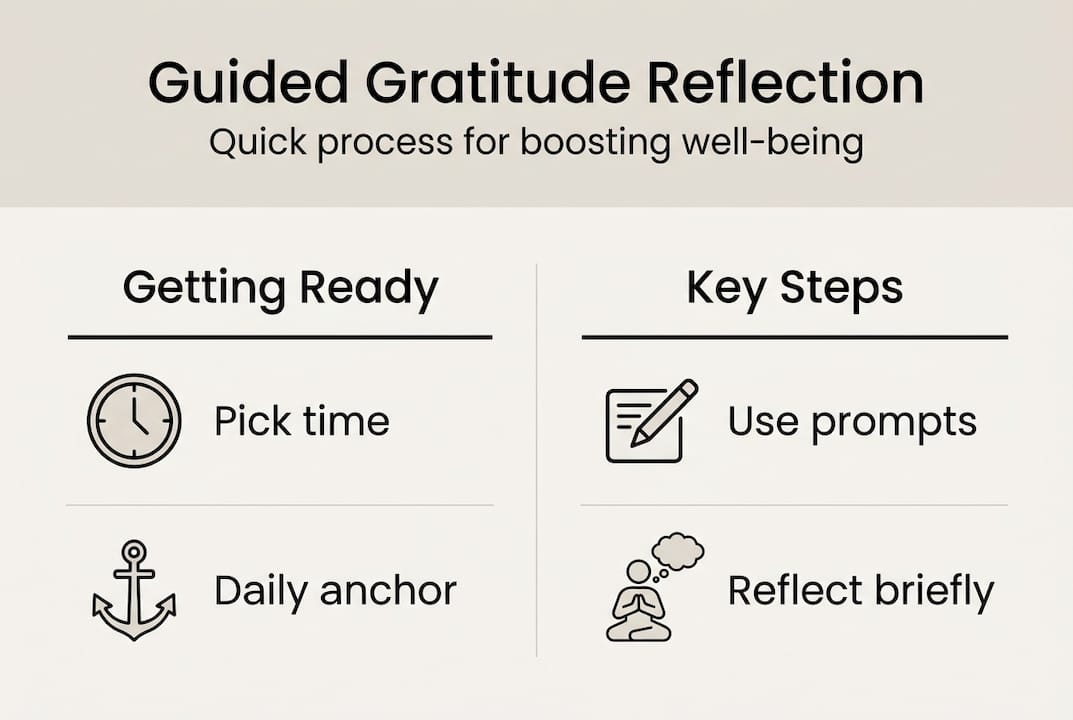
Pro Tip: Pick a time that already has a natural anchor in your day, right after your first cup of coffee or just before brushing your teeth at night. Attaching your practice to an existing habit makes it far easier to remember.
If you want a ready-made structure, a 5-minute gratitude ritual can give you a reliable framework without any guesswork.
Step-by-step: How to do guided gratitude reflection
Once your tools are ready, follow these simple steps for your first guided reflection. Each step has a purpose, so do not skip ahead.
- Set the scene. Sit somewhere quiet. Put your phone on silent. Take two slow breaths to signal to your brain that this is a different kind of moment.
- Choose your prompt. Pick one question to start. Examples: "What is one small thing that went right yesterday?" or "Who made my life easier this week and how?"
- Write without editing. Spend two to three minutes writing your response. Do not worry about grammar or sounding profound. Raw honesty works better than polished sentences.
- Pause and feel it. After writing, close your eyes for thirty seconds and actually sit with the feeling of appreciation. This step is where the emotional shift happens.
- Review and close. Read back what you wrote. Notice how you feel compared to when you started. That contrast is your progress indicator.
Writing gratitude lists and texts produces measurable boosts in mood and reductions in anxiety, which is why step three is non-negotiable. Thinking about gratitude is helpful. Writing it down is more powerful.
Pro Tip: Set a five-minute timer before you begin. Knowing there is a clear endpoint removes the mental resistance of "how long will this take?" and makes it easier to start.
| Session format | Best for | Limitation |
|---|---|---|
| Solo with prompts | Full control, private | Requires self-discipline |
| Guided app session | Beginners, structure lovers | Less personal customization |
| Group or partner session | Accountability, social boost | Scheduling can be tricky |
For a deeper look at structuring your sessions, the guided reflection framework at The Positivity Anchor is a solid place to start.
Common pitfalls and how to avoid them
Following the steps is simple, but some obstacles can get in the way, especially for beginners. Knowing what to expect makes it much easier to push through.
The most common missteps include:
- Being too vague. Writing "I am grateful for my family" every single day becomes automatic and loses its impact. Get specific: "I am grateful my sister called to check on me Tuesday."
- Skipping days and giving up. Missing one day does not ruin your practice. Missing a week and deciding it "does not work" does. Treat a skipped day like a skipped workout, just get back to it.
- Chasing a feeling. Some sessions will feel flat. That is normal. The benefit builds over time, not in every single sitting.
- Perfectionism. If you spend more time worrying about writing the "right" thing than actually writing, you are missing the point entirely.
"Progress requires patience. Results build over weeks, not overnight."
Gratitude interventions are not a cure-all, and effectiveness varies by person and requires time. That is not a reason to quit. It is a reason to stay realistic and patient. If you find yourself hitting a wall, exploring gratitude exercise barriers or reading about overcoming resistance can help you identify what is getting in the way.
Personalizing your prompts also makes a big difference. If career stress is your main challenge, write prompts around work wins. If relationships are your focus, write about people. The more relevant the prompt, the more genuine your response will be.
What changes to expect: Short- and long-term effects
You have started the practice. Here is what you can realistically expect, and how to notice signs of progress.
After your first session, you may feel a slight mood lift or a sense of calm. Do not expect fireworks. After one week of daily practice, most people report feeling less reactive to small frustrations and noticing more positive moments throughout the day. After one month, the shift becomes more structural. You start catching yourself thinking gratefully without prompting.

Key stat: RCTs confirm that gratitude practice reduces depression and anxiety post-intervention, with the strongest effects on positive affect. The gains are real, even if they are not dramatic.
Signs your practice is working:
- You ruminate less on what went wrong
- Small good moments feel more noticeable
- You feel slightly more patient with people around you
- Morning anxiety feels less intense
- You look forward to your reflection session
For a closer look at how these shifts connect to broader mood improvement benefits, the research is encouraging. One important caution: guided gratitude reflection is a powerful self-help tool, but it is not a substitute for clinical care if you are dealing with serious depression or anxiety. Use it as a complement, not a replacement.
Accelerate your growth with The Positivity Anchor
Building a new mental habit is easier when you have a clear structure waiting for you each morning. That is exactly what The Positivity Anchor program provides. It is a free, guided daily ritual designed to take you from stressed and scattered to calm and focused in just five minutes.
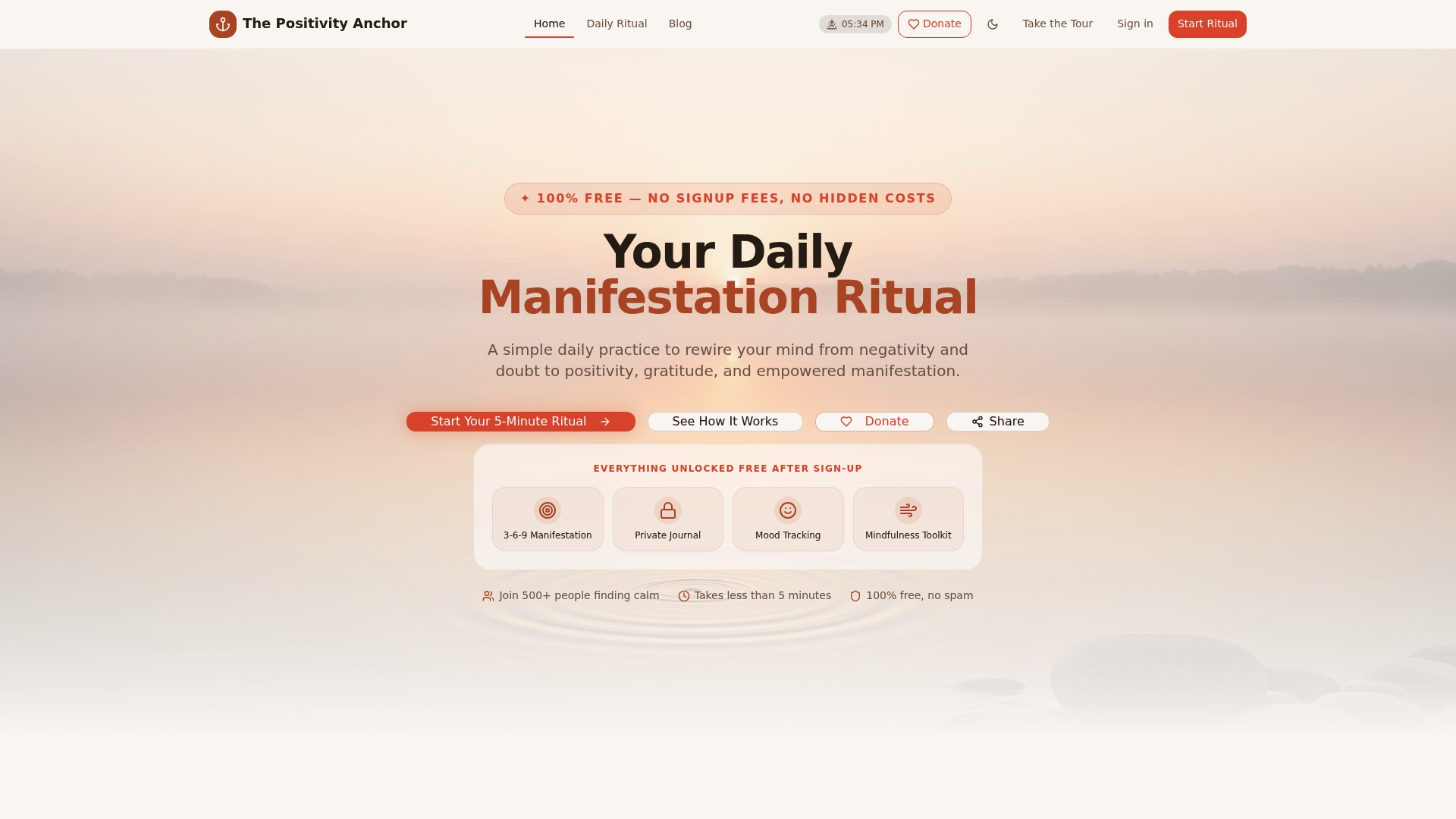
The platform combines gratitude prompts, affirmations, mood tracking, and mindful reflection into one simple daily flow. You do not need to figure out what to write or how to structure your session. It is all laid out for you. Whether you are brand new to this kind of practice or looking to make your existing routine more consistent, the gratitude and mindfulness blog also offers free resources to keep you learning and motivated. Start today, no account required, no cost, no pressure.
Frequently asked questions
How quickly can I feel results from guided gratitude reflection?
Small but reliable well-being increases appear after even brief gratitude reflection interventions. Most people notice brighter moods within a week, with deeper benefits building over consistent longer-term practice.
Is guided gratitude reflection suitable for people with depression or anxiety?
RCTs confirm reduced depression and anxiety after gratitude interventions, making it a helpful tool. However, it is not a substitute for professional mental health care and works best as a complement to other support.
What's the difference between guided and unguided gratitude journaling?
Guided sessions use specific prompts or instructions to direct your focus, which makes it far easier for beginners to stay on track. Guided gratitude practices like prompts and structured texts consistently outperform unstructured approaches in research.
Are there risks to practicing gratitude reflection?
The risks are very low for most people. The main pitfall is over-expecting instant transformation, which can lead to early dropout. Gratitude interventions work best when practiced consistently and with realistic expectations rather than as a quick fix.